Wings in the Dark: The Manta Ray Night Dive off Kona
Off the Big Island's Kona coast, spotlights in the dark water draw giant manta rays into a slow-motion feeding ballet.
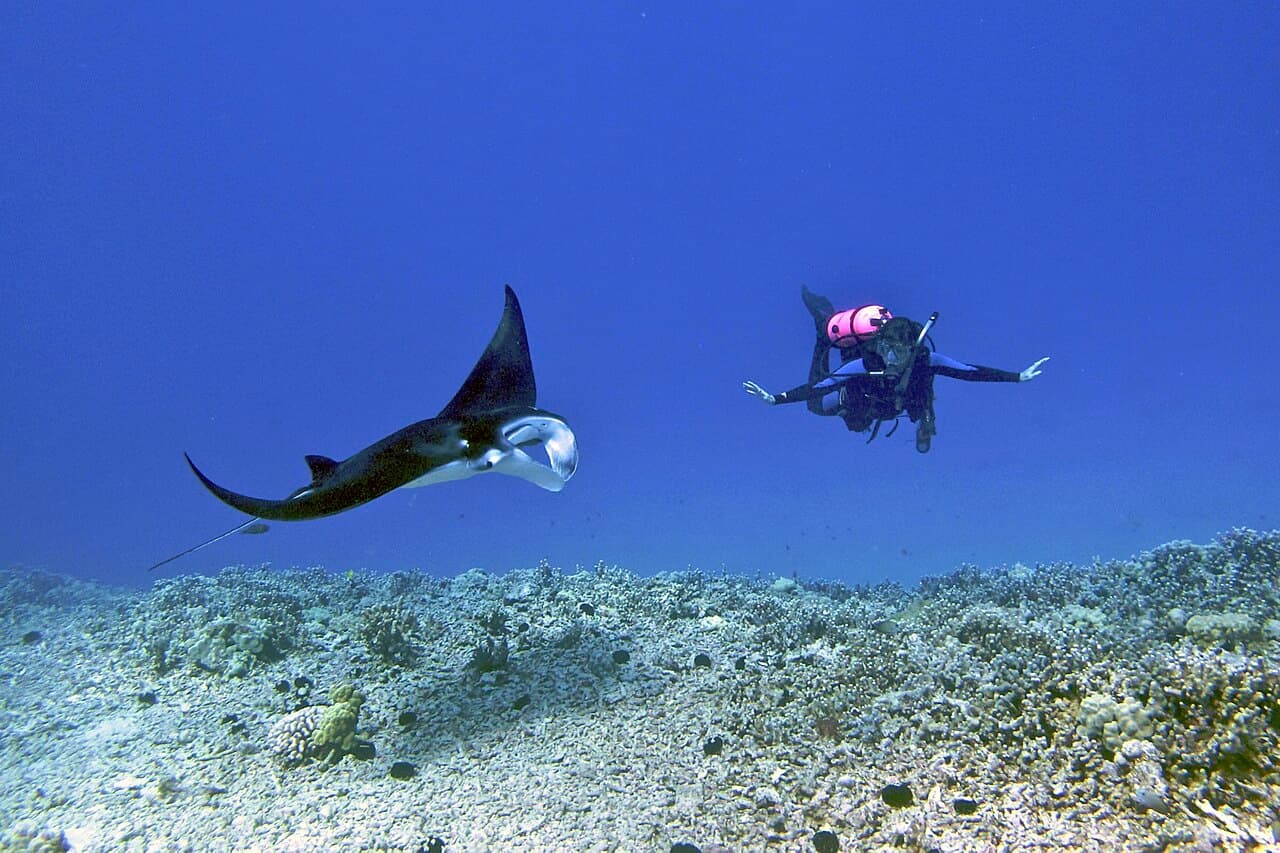
It is regularly called one of the best night dives on Earth, and for once the hype holds up. Off the Kona coast of the Big Island, divers and snorkelers gather around downward-facing lights that attract clouds of plankton — and the enormous manta rays that come to feast, looping and barrel-rolling inches overhead.
The Experience
As the lights blaze into the black water, mantas with wingspans of twelve feet or more sweep in to feed, their white bellies passing so close that participants are told simply to hold still and watch. It is graceful, slightly surreal, and utterly unlike any daytime encounter.
Doing It Right
Both certified divers and snorkelers can join, but conditions and darkness demand a careful, well-run operation. Book a reputable Kona outfitter, follow the briefing to the letter — hands to yourself, no touching the mantas — and remember that sightings, while common, are never guaranteed.
You keep your hands still and your light steady, and a twelve-foot ray writes loops in the dark above you.
Good to Know
- Open to both certified divers and snorkelers
- Sightings are common but never guaranteed
- Never touch the mantas — oils harm their skin
- Book an established, safety-focused Kona operator
The water gives back what you bring to it — patience, respect, and a little nerve.
More stories to read

Pipeline Season: Inside the North Shore's Winter of Consequence
When winter swells wrap onto the reef at Banzai Pipeline, Oʻahu's North Shore becomes the most watched stretch of water in surfing.

Chasing the Green Flash: Sunset Sails off the Kona and Maui Coasts
A late-afternoon catamaran cruise trades adrenaline for something rarer in Hawaiʻi: stillness, a mai tai and a shot at the green flash.

The Reef We Stand to Lose: Coral, Bleaching and Hope in Hawaiʻi
Hawaiʻi's reefs are the foundation of its ocean life — and a front line in the fight against warming seas.