In the Company of Honu: Meeting Hawaiʻi's Green Sea Turtles
Revered in Hawaiian culture and protected by law, the green sea turtle is one of the islands' most beloved — and most misunderstood — residents.
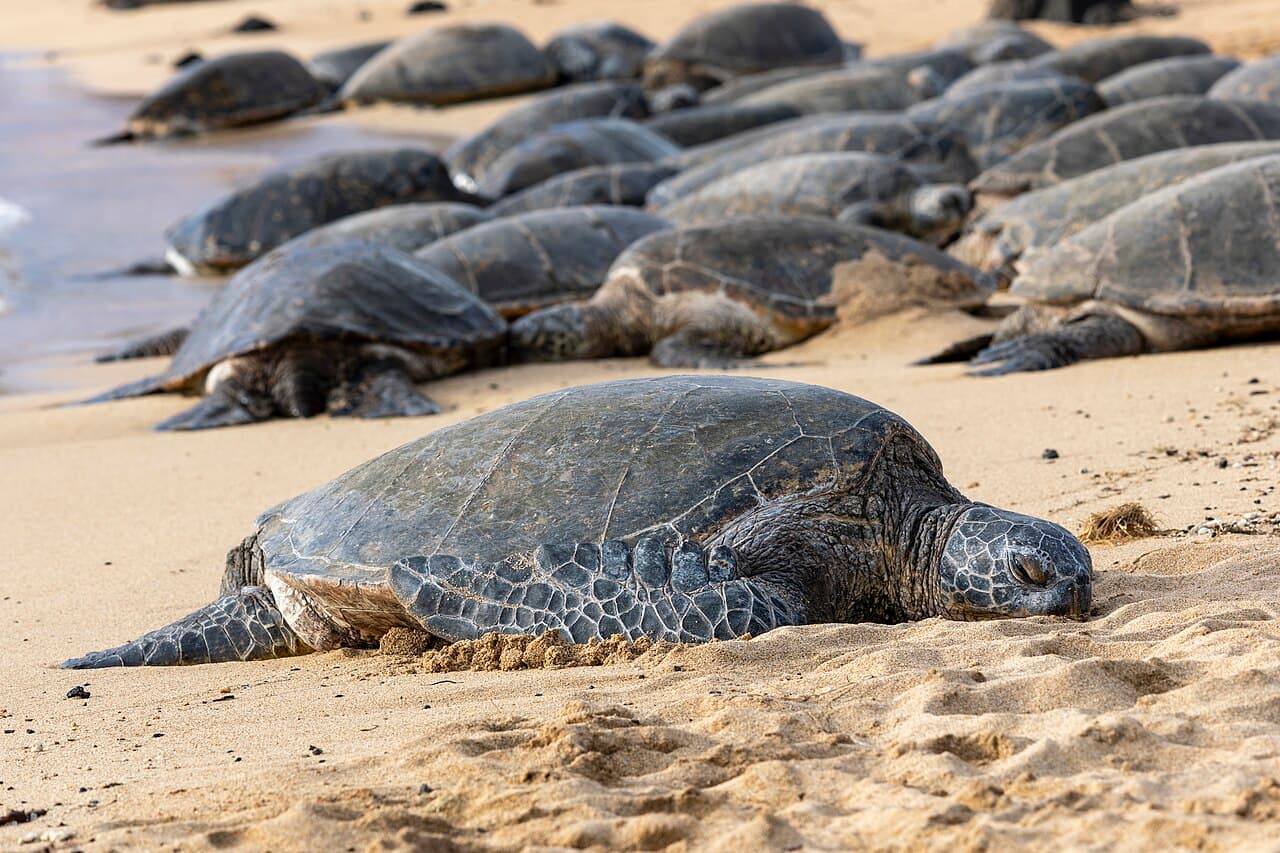
Few encounters delight visitors more than a green sea turtle, or honu, gliding past on a reef or hauling out to bask on warm sand. In Hawaiian tradition the honu is an ʻaumakua, a family guardian, and today it is protected by law — which makes knowing how to share its space essential.
Where to Find Them
Turtles frequent reefs and beaches across the islands, from Oʻahu's Laniākea — nicknamed Turtle Beach — to countless snorkeling spots where they graze on algae. Seeing them basking on shore is normal behavior, not a sign of distress, and part of how they rest and warm up.
Give Them Space
The single most important rule is distance: stay at least ten feet away, never touch or feed a turtle, and don't box one in on the beach or in the water. Volunteers often rope off basking turtles on busy beaches — respect the lines and let the honu rest.
The best turtle encounter is the one where the turtle barely notices you were there.
Good to Know
- Stay at least 10 feet away on land and in the water
- Never touch, feed or pour water on a turtle
- Basking on the beach is normal resting behavior
- Respect volunteer ropes at spots like Laniākea
Respect the ocean, read the conditions, and the reward is a day you will replay for years.
More stories to read

Pipeline Season: Inside the North Shore's Winter of Consequence
When winter swells wrap onto the reef at Banzai Pipeline, Oʻahu's North Shore becomes the most watched stretch of water in surfing.

Chasing the Green Flash: Sunset Sails off the Kona and Maui Coasts
A late-afternoon catamaran cruise trades adrenaline for something rarer in Hawaiʻi: stillness, a mai tai and a shot at the green flash.

The Reef We Stand to Lose: Coral, Bleaching and Hope in Hawaiʻi
Hawaiʻi's reefs are the foundation of its ocean life — and a front line in the fight against warming seas.